
Women in Surfing: From Pioneers to Olympic Gold
From Polynesian princesses to modern-day champions, this journey charts the courage, challenges and triumphs of women surfing their way into history.
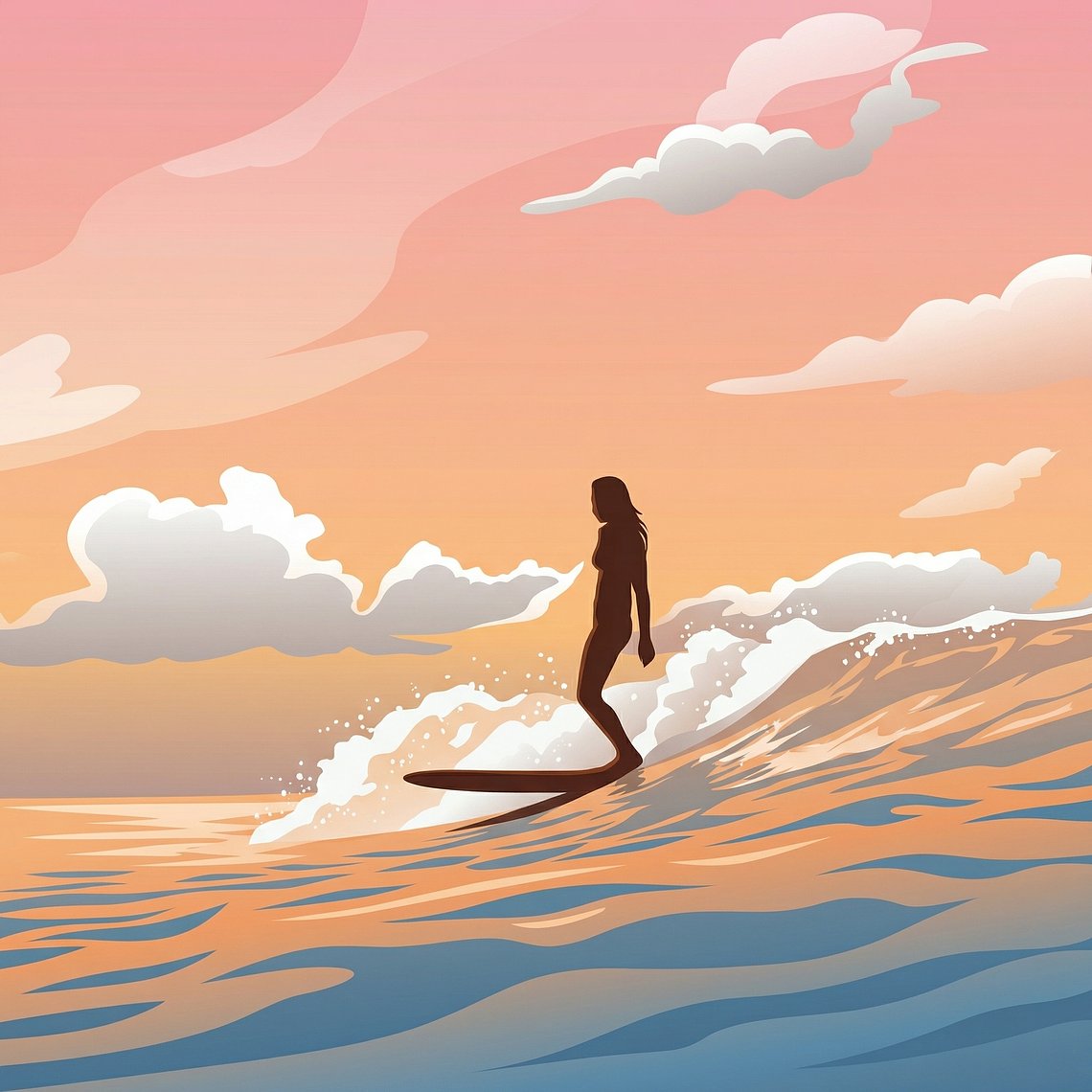
Posted on Sun 8 Mar 2026 · by Magikvanilla Surf School
Riding the Waves: The Evolution of Women in Surfing
Surfing’s story is incomplete without the women who have challenged conventions and paddled into waves against all odds. From Polynesian queens who ruled the line‑up to modern champions pushing the limits of what’s possible, women’s surfing has been a journey of grit, grace and groundbreaking change. This blog post explores that history, the barriers female surfers have faced and the milestones that have reshaped the sport. Each section references reliable sources to provide context and depth.
ANCIENT ROOTS AND EARLY PIONEERS
Women and surfing go way back, long before the sport went global. In the 1400s, Polynesian men and women surfed side by side. Princess Keala of Maui, one of the first known female surfers, was famous for being the best on the island. She even left her noble husband behind to return to Maui and surf more. These early days show that everyone was welcome to share in the ocean’s energy.
When surfing arrived in the United States in the early 1900s, the boards were massive, sometimes 14 feet long and made of heavy wood. It was tough for anyone to carry them to the water, and paddling out was a real challenge. Most women could only surf if they rode tandem with men. But a few started to break those limits. In the 1930s, Mary Ann Hawkins, a talented swimmer and almost an Olympian, became a leader among a small group of determined female surfers.
BOARDS GET LIGHTER, AND WOMEN STEP FORWARD
Things changed in the 1950s when foam boards came along, making surfing lighter and easier for everyone. For women, this was huge; it meant they could catch their own waves and ride them with confidence. Marge Calhoun stands out from this era. Instead of following the usual expectations for women in the 1950s, she picked up a surfboard at age 32 and went on to win the 1958 Makaha International Surfing Championships in Hawaii. Her daughters, Candy and Robin, followed her lead. Candy even became the first woman to bodysurf the famously tough Newport Wedge.
The 1960s brought real surf competitions, and with them, some hard truths. The first World Championships in 1964 gave women a chance to compete in professional surfing, but they still faced significant obstacles. Men often refused to leave the water during women’s heats; the contests barely received media attention, and prize money was much lower for women than for men. Still, surfers like Joyce Hoffman became stars, adopting new training routines and landing sponsorships. Trailblazers like Margo Oberg and Layne Beachley kept pushing the sport forward in the 1970s and 80s, showing that women could surf big waves and pull off the same moves as men.
FIGHTING FOR EQUALITY AMID SEXISM
The path to equality wasn’t easy. Even as more women took up surfing, event organisers and sponsors often overlooked them. It took until 1986 for the first women’s big wave contest to happen, over 500 years after Princess Keala’s time! Incredibly, as recently as 1989, a major surf event replaced the women’s competition with a bikini contest. When Pauline Menczer became world champion in 1993, she got no prize money and a broken trophy, while her male counterpart won a huge cash bonus. Her struggles with illness and finances show just how tough women surfers had to be.
In response to all this unfairness, women surfers started speaking out and taking action. In 2016, a group of six founded the Committee for Equity in Women’s Surfing (CEWS) to demand equal chances and equal pay. They pushed event organisers to make sure women’s events and prize money were included. Their campaign worked: In 2018, the World Surf League announced equal prize money for all its events starting in 2019. This major change followed a viral photo showing the huge disparity between the prizes awarded to male and female winners. For many, this was a huge step toward fairness and respect.
MODERN MILESTONES AND OLYMPIC RECOGNITION
Big changes have come in recent years. At the Tokyo 2020 Olympics, women surfed on the world’s biggest stage for the first time. Carissa Moore took home the first-ever women’s Olympic gold in surfing. Now, the World Surf League holds women’s events at the same spots as the men’s tour, so surfers like Stephanie Gilmore, Carissa Moore, and Tyler Wright get equal chances to shine. Big wave contests like the Pe’ahi Women’s Challenge and Mavericks have shown the world that women can handle the toughest waves out there.
Grassroots surfing is just as exciting. In the late 1990s and early 2000s, icons like Rochelle Ballard, Lisa Andersen, and Keala Kennelly proved women could pull off airs and ride super challenging waves. Today, stars like Stephanie Gilmore, Carissa Moore, Caity Simmers, and Molly Picklum are showing what’s possible, whether it’s landing huge tricks or competing after becoming moms. In 2019, the WSL made sure prize money was truly equal, and by 2022, men and women were competing at the same legendary spots like Teahupo’o and Pipeline.
ACTIVISM, COMMUNITY AND THE FUTURE
Equal prize money was a huge win, but there’s still work to do. Surfers like Bianca Valenti point out that a lack of funding held women back for years. She once won a 40-foot contest but got less than a third of the men’s prize money. That’s why she helped start the CEWS and celebrated the big 2019 change. Surf legend Jericho Poppler remembers how men used to push women out of the line-up, and how women had to prove they belonged. Now, with surfing in the Olympics and equal pay, things are finally shifting for the better.
Community is at the heart of women’s surfing. Surf schools, clubs, and events around the world give girls and women places to learn, connect, and grow. Magazines like SurfGirl celebrate every female surfer, whether they surf for fun or for trophies. Wavehuggers Surf School reminds us that women’s surf history is a team effort, with coaches, friends, and families all helping. Longboarding festivals and big-wave competitions show off just how many ways there are for women to enjoy the sport and push its limits.
RIDING FORWARD TOGETHER
From Polynesian princesses to Olympic gold medalists, women’s surfing has come a long way. The sport has changed from heavy boards and little recognition to equal prizes and worldwide respect. But there’s still more to do. By continuing to support each other, build inclusive communities, and celebrate a wide range of surf role models, we can make sure even more girls and women find their place in the line-up. As we celebrate International Women’s Day and the spirit of “Give To Gain” in 2026, let’s remember: every bit of support, cheering, mentoring, or helping out raises the tide for everyone.


